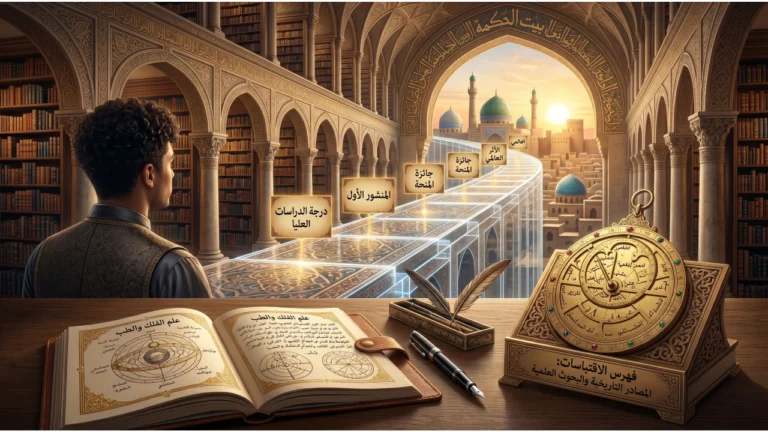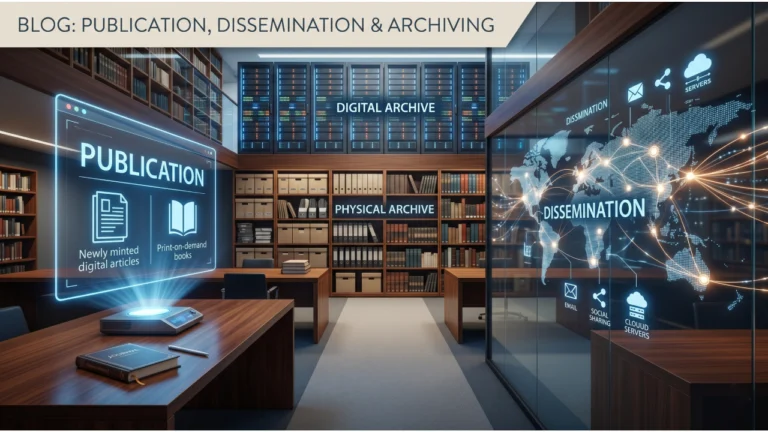



Introduction: The Importance of Intellectual Foundations.
Every enduring civilisational project begins with clarity of thought before action. Institutions, policies, and social movements cannot sustain themselves without a coherent intellectual foundation. The Research & Intellectual Development Wing therefore forms the conceptual backbone of the entire organisational framework described in this work.
Its primary mandate is to study, analyse, and propose frameworks that help understand the political, economic, and social realities affecting the Ummah in the contemporary world. While other wings translate ideas into action — through media initiatives, economic ventures, or outreach programs — the Research Wing prepares the intellectual groundwork that allows these actions to be guided by long-term vision rather than short-term reaction.
Without disciplined research, institutional initiatives risk becoming fragmented, reactive, and emotionally driven. The purpose of this wing is therefore to create a body of knowledge capable of guiding responsible institutional decision-making over time.
Intellectual Scope and Sources of Knowledge.
The intellectual scope of this wing is deliberately broad. It draws upon the foundational sources of Islamic thought — the Qur’an, Sunnah, and the intellectual heritage of classical scholarship — while also engaging with modern academic disciplines. Fields such as political science, economics, sociology, psychology, international relations, organisational theory, and technological development must all be examined carefully.
The objective is neither to isolate Muslim thought from global knowledge nor to imitate existing systems blindly. Rather, the Research Wing aims to engage critically with contemporary ideas while grounding its analysis within Islamic ethical principles.
Diagnosing the Structural Challenges Facing the Ummah
One of the central responsibilities of the Research Wing is to examine the structural causes of the Ummah’s current fragmentation. Discussions about Muslim societies often revolve around emotional responses to political crises or nostalgic references to historical periods. While such sentiments reflect genuine concern, they rarely produce systematic solutions.
The Research Wing must therefore approach these issues through rigorous analysis. Researchers within this wing will examine how institutions function, how economic systems operate, how governance models succeed or fail, and how identity formation occurs within societies.
Understanding these dynamics is essential before proposing meaningful alternatives.
Developing Long-Term Intellectual Alternatives
Another important dimension of the Research Wing’s work is the development of long-term intellectual alternatives. Many modern global systems operate according to philosophical assumptions that may not fully align with Islamic principles.
Rather than rejecting them outright or adopting them uncritically, researchers must analyse their structure, understand their advantages and limitations, and explore ways to construct models that remain ethically grounded while still functioning within contemporary realities.
The Research Wing will therefore study subjects ranging from global economic structures and international trade to geopolitical alliances, social identity patterns, and cultural transformation.
Relationship with Other Organisational Wings
Each organisational wing — including Media, Finance & Business, and Political, Legal & Social Outreach — will maintain its own internal research teams dedicated to its operational needs. Market studies, media analytics, policy drafting, and program evaluation will therefore be conducted internally by those respective wings.
The Research Wing does not function as an operational research department for other wings. Its responsibility is to develop intellectual foundations and conduct broader analytical studies.
However, other wings may consult the Research Wing when deeper conceptual understanding is required. The Media Wing may seek insight into social behaviours and narrative psychology. The Business Wing may consult researchers regarding geopolitical trends affecting markets. The Outreach Wing may request analytical perspectives on political or legal environments.
Such consultation ensures intellectual coherence while maintaining the operational independence of each wing.
Research on Economics, Geopolitics and Global Opportunities
One important area of research involves studying how economic opportunities interact with geopolitical realities. Economic expansion is rarely determined by market conditions alone. Political stability, regional alliances, trade policies, regulatory frameworks, and international power dynamics all influence investment environments.
By analysing these factors across different regions, the Research Wing contributes broader insight into how global conditions evolve. Such knowledge allows institutions to better understand where favourable environments for long-term development may emerge.
However, decisions regarding economic expansion and financial investment remain the responsibility of the Finance, Economics & Business Wing. The Business Wing determines how much financial capital is required for specific initiatives and plans its expansion accordingly. Its responsibility includes evaluating financial feasibility, allocating resources, and determining the pace of institutional growth.
Research informs understanding, while business leadership determines implementation.
Research on Relations Between Muslim Nations
Another major area of intellectual inquiry concerns relations among Muslim-majority nations. Researchers may analyse political, economic, and social connections between these societies and explore ways to strengthen cooperation among them.
At the governmental level, research may examine diplomatic partnerships, trade agreements, and regional economic cooperation. At the societal level, researchers may explore mechanisms that encourage stronger interaction among citizens through tourism, cultural exchanges, academic collaboration, and commercial partnerships.
Strengthening such interactions gradually contributes to a shared civilisational awareness among societies that share historical and religious ties.
Identity Formation and Civilisational Consciousness
Closely related to this is the study of identity formation. Many Muslim societies today operate within strong national or ethnic identities that sometimes overshadow broader civilisational connections.
Research can explore ways in which national identities may coexist with a broader Islamic consciousness without undermining cultural diversity. Understanding how identity develops within specific societies allows tailored approaches that encourage cooperation while respecting local traditions.
Political Systems and International Relations
The Research Wing will also examine domestic political systems across Muslim-majority countries and their relationships with neighbouring states and global powers.
Understanding how political institutions function, how alliances form, and how external actors influence domestic policy provides insight into the geopolitical landscape within which Muslim societies operate.
Such research allows institutions to develop informed perspectives on global political dynamics.
Strategic Council and Long-Term Direction
Another important component of institutional coordination involves the role of the Strategic Council. The Strategic Council establishes broad long-term objectives that guide the organisation’s overall direction.
These objectives may be structured across multiple time horizons — long-term goals spanning two decades, medium-term milestones covering ten or five years, and short-term priorities reviewed annually.
Once these objectives are defined, each organisational wing undertakes its responsibilities in ways that contribute toward achieving those goals.
For example, if a long-term objective were to strengthen cooperation among Muslim-majority nations across regions, the Strategic Council may outline milestones aimed at gradually increasing economic, cultural, and social interaction among those societies.
The Research Wing would then examine the intellectual foundations necessary to support such cooperation — studying historical ties, trade patterns, tourism potential, and cultural exchanges between societies.
At the same time, the Media Wing may highlight shared cultural narratives, filming travelling vlogs, shooting documentries about their devotion towards Islam, their struggles & success. Outreach Wing may facilitate academic or social exchanges, by sponsoring students education, it may also may look to establish relations between target nation celebrarities, politicians, businessmen, youth, entertainment channels. Business Wing may explore economic partnerships that strengthen regional cooperation, improve inter-state investments.
Through this coordinated approach, long-term objectives established by the Strategic Council gradually translate into practical initiatives carried out by each wing.
Financial Support and Intellectual Independence
Financial support for the Research Wing will be provided by the Finance, Economics & Business Wing as part of the organisation’s institutional structure.
However, the Research Wing retains autonomy in determining the scope, methodology, and feasibility of its intellectual projects. This independence ensures that research remains credible and free from short-term operational pressure.
Conclusion: The Intellectual Backbone of Institutional Change
Ultimately, the purpose of the Research & Intellectual Development Wing extends far beyond producing reports or academic studies. Its long-term objective is to cultivate an intellectual ecosystem capable of guiding civilisational renewal.
Ideas shape institutions.
Institutions shape societies.
Societies shape history.
If intellectual foundations remain weak, institutional efforts cannot endure.
For this reason, the Research Wing stands as the first pillar of the organisational architecture proposed in this work. It represents a commitment to disciplined inquiry, long-term thinking, and principled scholarship.
Only through such intellectual preparation can meaningful and sustainable change emerge.