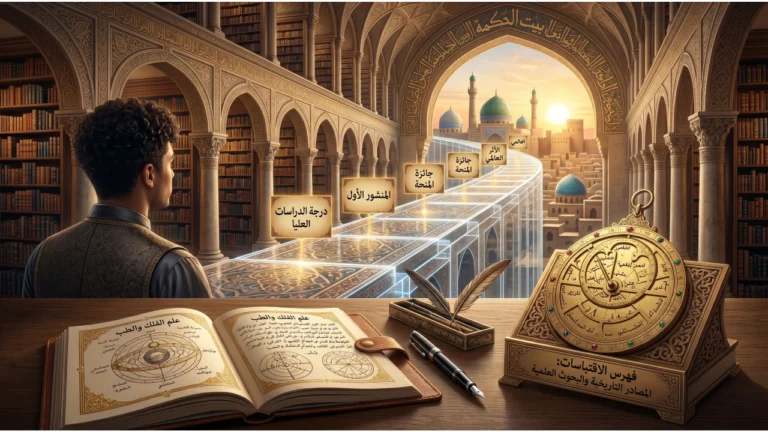



The Role of Research in Institutional Strategy
Research without application is academic exercise. Application without research is blind activism.
The Research Wing exists to ensure that neither failure mode defines the Holding Organisation. Its function is not to produce knowledge for its own sake, but to generate actionable intellectual frameworks that inform the decisions of the Strategic Council, equip the Media Wing with credible content, and provide the Outreach Wing with implementable proposals.
In this sense, the Research Wing operates as the brain of the organisation. Every initiative across every wing ultimately traces back to an intellectual foundation. That foundation must be rigorous, honest, and strategically oriented.
This chapter outlines the core research priorities across three domains: political systems, economic systems, and social systems. These are not exhaustive categories. They are illustrative starting points, subject to refinement by The Group and the Strategic Council as the organisation matures.
Political Research Priorities
Regional Integration Among Muslim Nations
One of the most consequential failures of the post-colonial Muslim world has been the inability to translate geographic proximity and shared civilisational heritage into functional political and economic cooperation. Borders drawn by colonial powers, sustained by nationalist ideology, and deepened by elite self-interest have produced a fragmented political landscape that weakens every constituent part.
The Research Wing will prioritise the production of serious, evidence-based papers examining how neighbouring Muslim nations can strengthen economic, defence, and trade ties. This is not idealistic pan-Islamism. It is a practical examination of what works, what has failed, and what is structurally achievable under present conditions.
Research in this area will focus on four illustrative regional groupings, referred to here as Target Regions. These designations are provisional and subject to revision by The Group:
Target Region 1 — MIB Block
Malaysia, Indonesia, and Brunei. Three Southeast Asian nations sharing geographic proximity, Malay cultural heritage, and broadly compatible governance structures. Research papers will examine the feasibility of a formal trading bloc, with particular attention to halal industry integration, maritime trade corridors, and defence cooperation. Where institutional frameworks already exist — such as ASEAN — research will examine how MIB cooperation can be deepened within and beyond those structures.
Target Region 2 — Central and South Asian Corridor
Kazakhstan, Uzbekistan, Turkmenistan, Tajikistan, Kyrgyzstan, Afghanistan, Pakistan, and Bangladesh. Eight nations spanning Central and South Asia, connected by land routes, shared historical memory, and significant Muslim majority populations. Research will examine trade corridor development, energy cooperation, labour mobility frameworks, and the gradual reduction of trade barriers. Special attention will be given to Afghanistan as a potential pilot environment for alternative economic models discussed later in this chapter.
Target Region 3 — Gulf and Levant
Saudi Arabia, Oman, UAE, Bahrain, Qatar, Kuwait, Jordan, and Egypt. Where formal cooperation already exists — most notably through the Gulf Cooperation Council — research will not duplicate existing work but will examine how existing frameworks can be strengthened toward deeper economic and eventually monetary union. The GCC represents the most advanced existing model of Muslim regional integration. Its successes and limitations offer lessons applicable to other target regions.
Target Region 4 — Northern Middle East
Iraq, Syria, and Turkiye. A region shaped by recent conflict, competing geopolitical interests, and significant reconstruction challenges. Research will focus on post-conflict economic normalisation, cross-border trade restoration, and the conditions necessary for political stabilisation that serves civilian populations rather than external powers.
Diagnosing and Addressing Inter-Muslim Mistrust
Regional integration cannot proceed without honestly confronting the structural mistrust that exists between Muslim nations. This mistrust is not imaginary. It has historical roots, is sustained by elite interests, and is frequently deepened by external actors who benefit from Muslim fragmentation.
The Research Wing will commission papers specifically dedicated to diagnosing the sources of mistrust between Muslim nations — whether historical grievances, border disputes, sectarian manipulation, or competing national interests — and proposing credible remedies. These papers will avoid romantic assumptions about Muslim brotherhood being sufficient to overcome structural conflict. Instead, they will examine what incentive structures, institutional mechanisms, and confidence-building measures have historically reduced inter-state mistrust and how those lessons apply to the Muslim world specifically.
Research findings in this domain will be directly relayed to the Media Wing for translation into accessible public content and to the Outreach Wing for diplomatic and relationship-building application.
A Note on Civilisational Divergence: Turkey and Indonesia
Turkey and Indonesia represent a particularly instructive case study for the Research Wing’s political priorities. The two nations share the same prophetic tradition, the same foundational doctrine of right and wrong, and the same civilisational heritage rooted in Islamic theology and jurisprudence. Yet both underwent dramatic processes of secularisation and Westernisation during the twentieth century — not through organic internal evolution, but through deliberate institutional, academic, and media pressure originating largely from Western-led global influence.
In Turkey, this took the form of state-imposed secularism under Kemalism — the systematic dismantling of Islamic institutional life, the replacement of Arabic script, the suppression of religious expression in public life, and the reorientation of national identity away from the Ottoman and Islamic heritage toward a narrowly defined secular nationalism. In Indonesia, the process was more diffuse but equally consequential — Western-educated elite capture of academic institutions, media frameworks that imported secular liberal assumptions, and development models that marginalised Islamic economic principles.
The significance of this comparison is not that Turkey and Indonesia are geographically proximate — they are not. The significance is precisely the opposite: two nations separated by thousands of kilometres, with distinct languages, cultures, and histories, yet sharing identical doctrinal foundations, were both pulled in similar directions by the same external forces. This suggests that the erosion of Islamic civilisational confidence is not a local failure but a systemic one — the product of a globalised academic and media architecture that consistently marginalised Islamic frameworks as premodern, irrational, or incompatible with development.
Research papers examining this divergence will serve a dual purpose: first, to honestly diagnose how it happened and what was lost; second, to identify what conditions allowed partial recovery — as evidenced in both Turkey and Indonesia in more recent decades — and what further recovery might require institutionally.
Long-Term Vision — Toward Economic and Defensive Union
The long-term political research horizon extends beyond trading blocs toward more ambitious forms of integration. Research papers will examine, on a long-term basis, the conditions and sequencing necessary to move target regions toward structures analogous to the European Union on economic matters and NATO on collective defence.
This is not a near-term proposal. It is a generational research agenda. The purpose of publishing in this direction now is to establish the intellectual groundwork before the political conditions exist, so that when windows of opportunity open, credible frameworks are already available rather than being improvised under pressure.
Economic Research Priorities
An Alternative Economic Framework
The dominant global economic system rests on interest-based finance, speculative capital markets, and extractive models of resource distribution that have produced significant inequality within and between nations. Islamic economic tradition offers a principled critique of this system and a set of alternative frameworks rooted in equitable distribution, prohibition of riba, and the treatment of wealth as a trust rather than an end.
The Research Wing will prioritise the development of technically rigorous papers examining alternative economic systems grounded in Islamic principles. This work will not be limited to abstract theology. It will engage directly with questions of practical implementation — taxation models, monetary policy alternatives, public finance architecture, and bureaucratic reform.
Key research questions will include: How can zakat be institutionalised at a state level to function as a genuine redistributive mechanism rather than a symbolic obligation? What models of Islamic microfinance have demonstrated scalability? How can sukuk and other Islamic financial instruments be developed beyond their current role as conventional finance substitutes into genuinely distinct economic tools?
Pilot Project — Riba-Free Economic Systems
Abstract research has limited impact without demonstrated application. The Research Wing will therefore develop detailed feasibility papers for pilot projects in jurisdictions where regulatory and political conditions may allow experimentation with interest-free economic models.
Afghanistan presents a unique, if difficult, case. As a nation undergoing reconstruction with limited integration into conventional global financial systems, it may offer regulatory space for alternative economic models that would face significant institutional resistance elsewhere. Research will examine what a riba-free municipal economy might look like in practice, what institutions would be required to sustain it, and what transition pathways exist from current conditions.
Brunei, as a small, stable, wealthy Muslim-majority nation with significant state capacity and existing Islamic governance frameworks, presents a different but equally interesting case. Research will examine how Brunei’s existing institutions could be developed into a model of Islamic economic governance that other nations might study and adapt.
These are illustrative examples. The selection of actual pilot environments remains subject to The Group’s judgment and expert recommendation.
Economic Integration Across Wings
The Research Wing does not operate in isolation from the organisation’s economic activities. The Business Wing will generate revenue that sustains the organisation. The Research Wing will in turn produce frameworks that inform how that revenue is deployed, how business ventures are structured ethically, and how the organisation’s economic activities contribute to the broader goal of Ummah economic independence.
Research papers examining human resource mobilisation across sectors will provide the Business Wing with frameworks for identifying, developing, and deploying talent in ways that strengthen inter-state relations and create economic interdependence between Muslim communities across target regions.
Social Research Priorities
Islamic Identity as Primary Ingroup
One of the most significant barriers to Muslim unity is the dominance of national, ethnic, linguistic, and racial identities over shared Islamic identity. A Pakistani and an Indonesian may share faith, values, and civilisational heritage, yet experience themselves as fundamentally separate in ways that a shared national identity would not permit.
The Research Wing will prioritise papers examining how Islamic identity can be practically strengthened as the primary ingroup identity across target regions — not by suppressing legitimate cultural diversity, but by building shared institutional, economic, and social bonds that make the Islamic ingroup tangible rather than merely theological.
This research will draw on social psychology, political sociology, and historical case studies of successful ingroup identity construction to develop evidence-based frameworks for identity strengthening across target regions.
Inter-Nation Marriage and Social Cohesion
Among the most underexamined mechanisms for building genuine social bonds between Muslim communities is inter-nation marriage. Where families are connected across borders, political conflict becomes personally costly. Where cultural exchange happens at the most intimate level, stereotypes and mistrust erode naturally over time.
The Research Wing will examine the conditions under which inter-nation marriages between Muslims across target regions can be encouraged and normalised. Research will examine current barriers — legal, financial, cultural, and logistical — and propose frameworks for reducing those barriers.
Research will also examine the role of media in shaping marriage preferences and social aspirations. This will provide the Media Wing with evidence-based guidance on how documentary coverage, dramatic content, and celebrity visibility can organically glamourise and normalise inter-regional Muslim marriages. Incentive structures — such as offering advertising contracts from the Business Wing to entertainment channels and production houses that feature such content — will be examined as a practical mechanism for encouraging media participation without direct editorial interference.
Initial research focus will be on the MIB region and the Central-South Asian corridor, where cultural proximity makes early progress most feasible.
Madrasa Curriculum Reform
Existing madrasa systems across target regions represent an enormous and largely unrealised institutional asset. Millions of students pass through these institutions annually. The quality, relevance, and strategic orientation of their education has direct consequences for the intellectual and institutional capacity of the Ummah for generations.
The Research Wing will produce papers examining existing madrasa curricula across target regions, identifying strengths, gaps, and areas requiring reform. This research will inform the work of the Outreach Wing, which carries responsibility for actual implementation of educational reform proposals.
Research in this area will be conducted with sensitivity to the diversity of madrasa traditions and will avoid imposing uniform prescriptions. The goal is to identify principles and frameworks that can be adapted to local contexts rather than standardised templates that ignore them.
Research Governance and Strategic Direction
The priorities outlined in this chapter are illustrative rather than exhaustive. The actual research agenda of the Research Wing will be set through a structured process involving the Strategic Council, Wing leadership, and advisory committee input.
Yearly, five-year, and decade-level research targets will be established by the Strategic Council in accordance with the organisation’s broader strategic direction. The Research Wing will operate within these targets while retaining sufficient intellectual independence to pursue findings honestly — including where those findings complicate or challenge the organisation’s own existing assumptions. Institutional credibility depends on intellectual integrity. A research wing that produces only convenient conclusions is not a research wing — it is a publicity department.
All major research outputs will be shared with the Media Wing for translation into accessible public content and with the Outreach Wing for practical application. The Research Wing does not communicate directly with the public as its primary mode — it communicates through the organisation’s other wings, ensuring coherence of message and strategic alignment of output.
Conclusion
The Research Wing is not a library. It is not an academic journal. It is the intellectual engine of a purposeful organisation with civilisational ambitions.
Its work begins with honest diagnosis — of fragmentation, mistrust, economic dependency, and identity erosion. It proceeds through rigorous analysis — of what has worked, what has failed, and what is structurally possible. It concludes with actionable frameworks — proposals that the Media Wing can amplify and the Outreach Wing can implement.
The brain without the body is paralysed. The body without the brain is blind. This wing exists to ensure the organisation thinks clearly before it acts decisively.